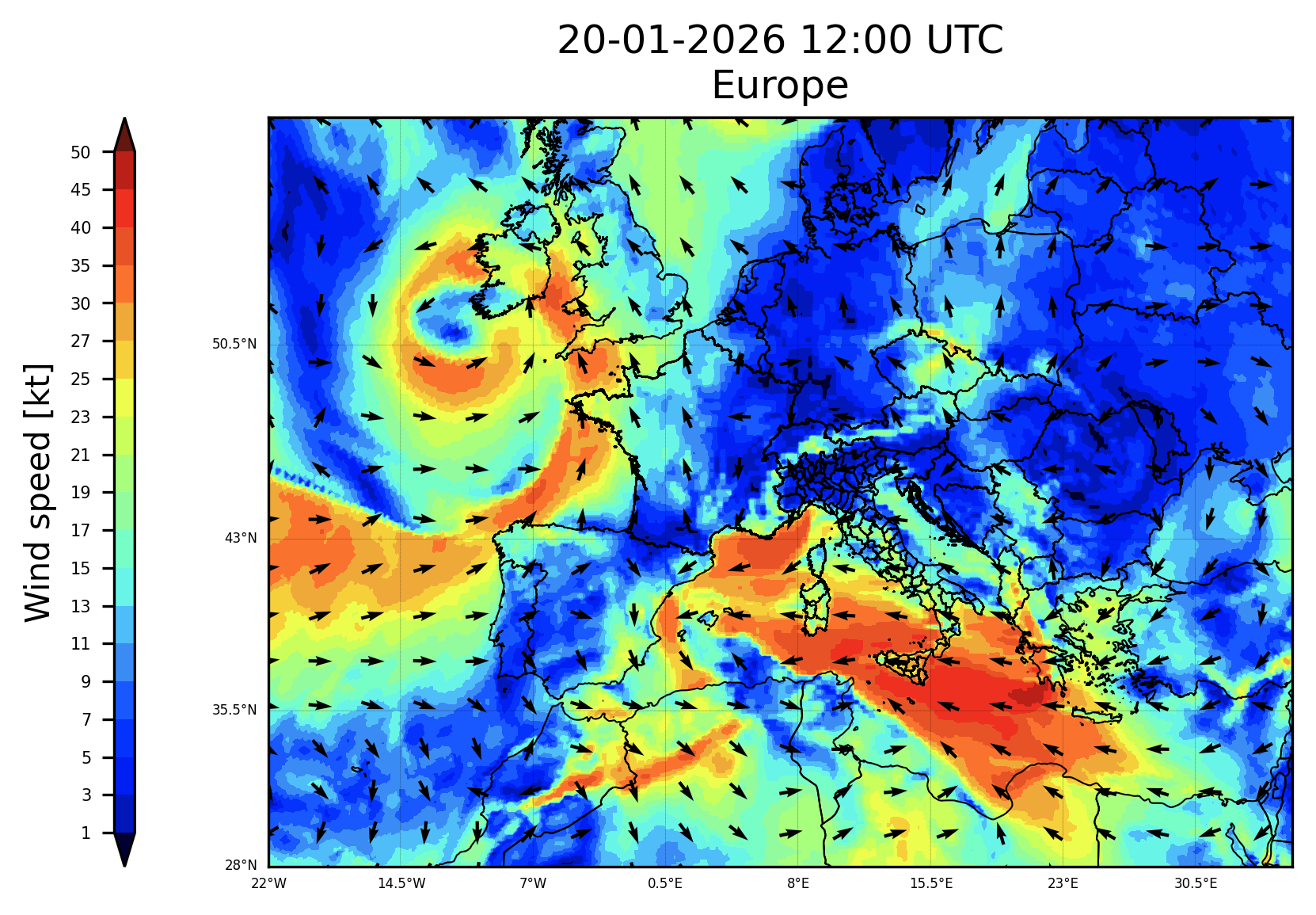
In 2026, meteo@uniparthenope proudly marks its 15-year anniversary since being officially founded in 2011 under the aegis of the University of Naples “Parthenope” as the Center for Monitoring and Modelling Marine and Atmospheric Research & Applications (CMMMA). While operational workflows for coupled atmospheric and ocean prediction were already maturing in the early 2000s within the Department of Science and Technology’s academic tradition, it was in 2011 that the centre was formally established to serve both scientific and societal needs, with high-resolution forecasts rooted in advanced research thanks to the perseverance of Professor Giancarlo Spezie and Professor Giulio Giunta realizing one of their academic dreams.
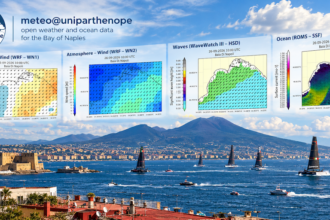
From its inception, meteo@uniparthenope, now led by Professor Giorgio Budillon, has stood at the intersection of meteorological science, oceanography, computational science, and data-driven technologies. It delivers daily updated weather, ocean, and air quality forecasts with fine spatial and temporal resolution across the Mediterranean and Italian regions. These forecasts are not mere outputs of off-the-shelf tools, but the products of carefully configured and operationalized numerical weather prediction models—including WRF, WW3, ROMS, and innovative coupled schemes that integrate atmospheric and marine physics, hydrodynamics, and environmental transport processes.
At its core, the centre embodies a scientific workflow that bridges meteorology and ocean science with high-performance computing (HPC). The High-Performance Scientific Computing Laboratory (HPSC Lab) within the University’s Department of Science and Technology designs, implements, and manages the computational infrastructure and workflows necessary for routine forecast production. These capabilities reflect decades of multidisciplinary research combining mathematics, large-scale numerical methods, distributed computing frameworks, and cutting-edge data analysis algorithms.
In recent years, meteo@uniparthenope has further embraced artificial intelligence (AI) to expand its modeling suite, including AI-based water-quality modeling platforms. These innovative developments complement traditional physics-based models and enhance predictive insights into complex environmental systems, underscoring the centre’s commitment to scientific rigour and technological advancement.
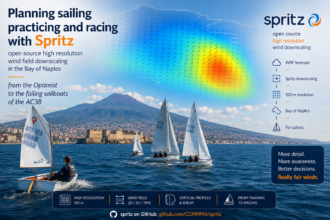
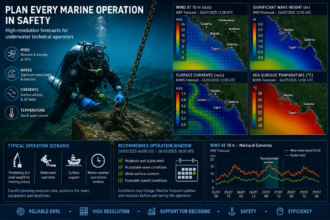
The societal impact of meteo@uniparthenope is equally significant: its forecasts have supported major events like the America’s Cup World Series and the Universiade, underscoring its operational credibility and service value to institutions, event organisers, and the broader public. Open data access and APIs further democratise environmental information, enabling researchers, professionals, and enthusiasts to engage with high-quality forecast datasets.
As the centre celebrates this milestone, it stands on a foundation of scientific rigor, computational excellence, and a vision for integrative environmental intelligence spanning meteorology, oceanography, HPC, and AI.
Looking ahead, we invite the scientific and professional community to join the conversation at the IEEE eScience 2026 conference—to be held at Villa Doria d’Angri, Naples, Italy, from September 28th to October 2nd, 2026, hosted by the University of Naples “Parthenope” and led by Professor Raffaele Montella (CTO of meteo@uniparthenope) as General Chair. How can advances in HPC, AI, and environmental modelling further transform predictive science and societal resilience? Share your insights at eScience 2026!